
You can’t prompt your way to a real perspective.
Fashion has always understood something that the rest of the professional world is only now being forced to confront.
A coat is a coat. A bag is a bag. On paper, the difference between a $40 jacket and a $4,000 one is materials and construction. But fashion figured out decades ago that the product is almost never the point. The point is the world the product invites you into - the belief system it carries, the specific aesthetic conviction behind it, the person or house whose irreducible point of view made it exist in the first place.
You don't buy into Jacquemus because you need a hat. You buy into a particular way of seeing the South of France, femininity, and proportion that only Simon Porte Jacquemus could have built - because it came from his specific life, his specific eye, his specific obsession. Remove him from the equation and you have a hat company. With him, you have a world.
Fashion knew this was the only sustainable moat. The rest of the world is learning it now - the hard way.
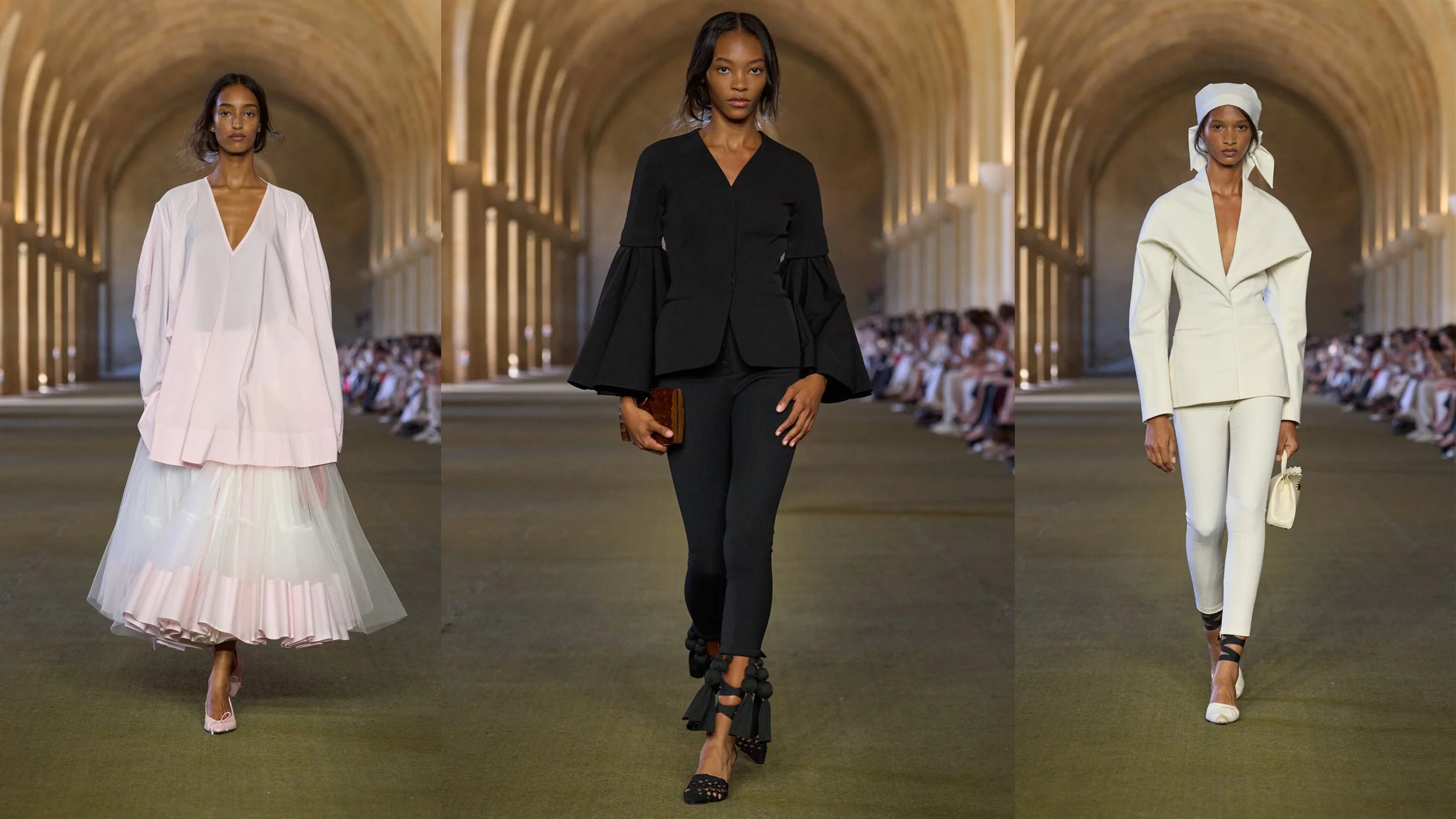
Jacquemus Spring/Summer 2026 Show | Source: Who What Wear
AI is clarifying something that was always true
Last week I built a fully functional review website in under an hour using Lovable. I've been self-taught in HTML and CSS for years - I know what it takes to build something properly, the craft behind it, the accumulated knowledge of how things fit together and why. That skill is real and it matters.
But what the hour clarified was this: the technical execution and the creative direction behind it are two different things. Lovable could build the structure. It couldn't decide what the site should feel like, what it was trying to communicate, whether the hierarchy was right, whether the whole thing actually worked as an experience. Every meaningful decision in that hour was still mine - the judgement, the taste, the point of view about what good looks like.
The skill got faster. The art direction remained entirely human.
Something similar is happening across industries right now. The tools are getting extraordinarily good. Legal research that once took days gets done in minutes. Creative briefs, financial models, market analysis - tasks that defined entire roles are becoming starting points rather than outputs.
What this is doing, more than anything, is separating two things that were always distinct but easy to conflate: the execution and the perspective behind it.
Rick Rubin understood this long before the current conversation. As he writes in The Creative Act: "No matter what tools you use to create, the true instrument is you."
The tools were never the point. They were always just the tools. What has always mattered — and what the current moment is simply making impossible to ignore - is the specific, honest point of view that decides what gets made, why it gets made, and what it is actually trying to say.
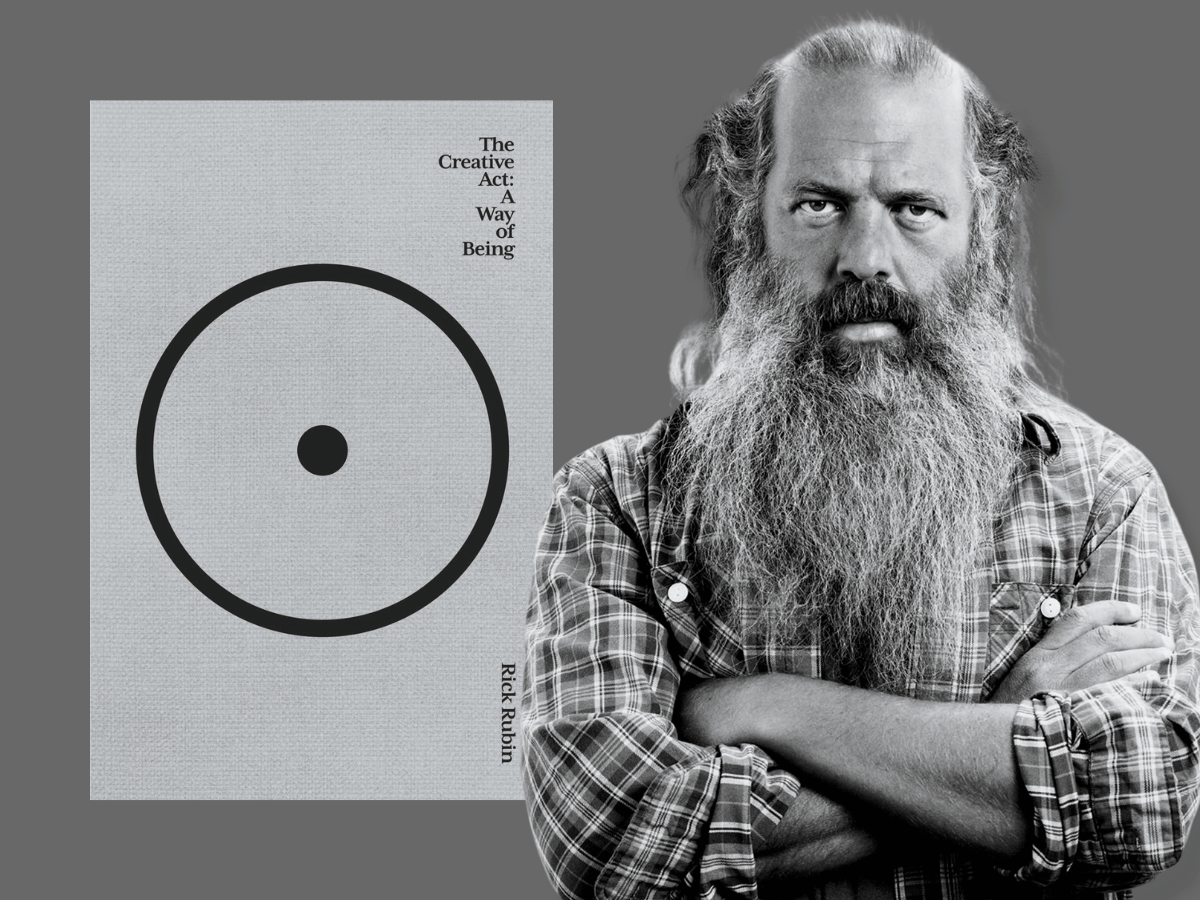
The Creative Act: A Way of Being by Rick Rubin. An Artist’s Bible.
What builds and what doesn't
There is a version of professional life built around executing well within existing frameworks. It is valuable, it is learnable, and increasingly, it is something machines do better and faster than humans.
And there is another version built around having something genuinely worth saying - a perspective shaped by specific experience, genuine curiosity, and the willingness to say what you actually think rather than what the room expects.
The first compounds slowly and then stops. The second compounds indefinitely because no one else has lived your particular life, noticed what you notice, or cares about what you care about in exactly the way you do.
"Look for what you notice but no one else sees," Rubin writes. That is not a creative instruction. It is the only brief that cannot be automated.
The founders, creators, and professionals building something lasting right now are not the ones with the most impressive tool stacks. They are the ones who have done the harder, slower work of figuring out what they actually think - and have built the courage to say it clearly in public.
What this means for how you build
This is where fashion's lesson becomes useful for everyone.
The brands that endure are not the ones with the best supply chains or the most optimised ad accounts. They are the ones with a genuine world behind them - a specific aesthetic conviction that only one person or house could have built, expressed consistently across everything they make and say.
The same is true for founders, consultants, and creatives building a public presence. The most strategic investment right now is not a new tool, a new platform, or a new credential. It is in the clarity and honest expression of what you actually stand for.
Not a personal brand in the shallow sense - a content calendar, a posting cadence, a carefully curated grid. Those are executional. What underneath them: the real answer to what do you genuinely believe that others in your space don't say? What have you built, lived, or observed that gives you a perspective no one else has exactly? What would you still believe even if it wasn't popular or profitable?
That answer - found, articulated, and expressed consistently - is the only currency AI cannot print.
Fashion knew. The rest of the world is simply catching up.
Thinking about what your brand is actually saying?
I work with a small number of founders at a time on exactly this. If it feels relevant, book a conversation.
